Receive SIWI’s latest news, events, reports and jobs directly in your inbox.
You can unsubscribe at any time, and we will never share your email address.
Receive SIWI’s latest news, events, reports and jobs directly in your inbox.
You can unsubscribe at any time, and we will never share your email address.
Governing water wisely in a world transformed by climate change
Climate change is rewriting the global water cycle. Rainfall is shifting, droughts and floods are intensifying, soils are drying, glaciers are melting, and groundwater is under pressure. Water is becoming harder to predict — and much harder to manage.
This makes water governance one of the most decisive challenges of our time. Good governance helps societies adapt, protects ecosystems, strengthens economies, and reduces inequality. Weak governance leaves communities exposed and institutions overwhelmed.
This thematic area focuses on how the world can govern water wisely when the climate itself is changing.
When the water cycle changes, everything else does too: food production, energy systems, cities, economies, ecosystems, and public health. Climate change has made risk the new normal — but governance determines whether that risk becomes crisis or resilience.
Stronger, climate-informed governance is essential to secure water for people and nature, reduce disaster impacts, and keep countries on a sustainable development path.
Climate policies often overlook water — yet most climate impacts are felt through too much, too little, or too polluted water. Water institutions and climate institutions still operate in parallel worlds.
We help bridge that gap by:
When water and climate planning are aligned, countries can protect lives, safeguard development, and invest for long-term resilience.

Traditional governance focuses on rivers, lakes, and aquifers (“blue water”). But climate change is reshaping green water — the soil moisture and rainfall stored in landscapes that sustain forests, crops, and ecosystems.
Ignoring green water means ignoring the foundation of food security, carbon storage, and long-term resilience.
We help advance governance of the full hydrological cycle by:
Governing all water — not just the water we can see — is essential to building stable, climate-resilient societies.

Advancing water governance in a changing climate and hydrological cycle

conference
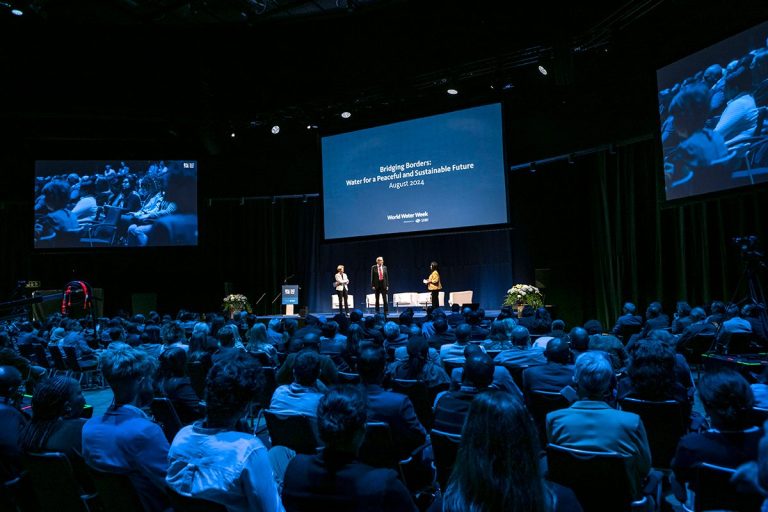
World Water WeekWorld Water Week is the meeting place for everyone who wants to understand how water can help us address the world’s greatest challenges. Established in 1991, World Water Week is the leading annual conference on global water issues.

Lorem ipsum
Water for ClimateA collaborative effort of over 90 organizations to unify and amplify the voice of the international water community within climate spaces.
Latest insights, analysis, and updates on water governance