STAY INFORMED
SIWI newsletter
Receive SIWI’s latest news, events, reports and jobs directly in your inbox.
You can unsubscribe at any time, and we will never share your email address.

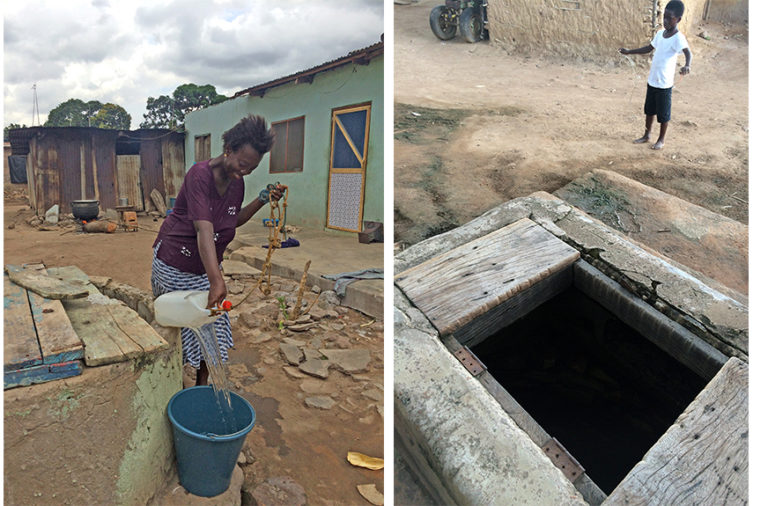
Between 2010 and 2050, the urban population in sub-Saharan Africa is expected to almost quadruple to over 1 billion people. Most of the growth will take place in slums and informal areas. Here, many use water from shallow wells, despite the fact that it is vulnerable to pollution. There are rarely any institutions effectively concerned with managing urban groundwater reserves.
In such complex environments, radical change is required to move away from non-existent or unsustainable practices towards improved governance and sustainable groundwater management, taking the interests of the poor into consideration. These radical changes need to be characterized by solid information and systems thinking.
In 2015–2020, SIWI participated in a research project called Experimenting with practical transition groundwater management strategies for the urban poor in sub-Saharan Africa, focusing on Kampala (Uganda), Arusha (Tanzania), and Dodowa outside Accra (Ghana). This was part of the interdisciplinary programme Unlocking the potential of groundwater for the poor in sub-Saharan Africa (UPGro). SIWI’s Dr Jenny Grönwall focused on the situation in Accra and Dodowa as an example of a rapidly growing, mixed peri-urban area where residents increasingly depend on groundwater.
The role of groundwater and aquifers in buffering the effects of climate variability is increasingly acknowledged. The full potential, however, can only be fully realized with a more robust understanding of the resource, and of the variations in use and dependency.
Accra and its hinterland exemplify an African city with chronic water shortages, where groundwater resources offer opportunities to improve resilience against recurring droughts and general water insecurity. Planners and decision makers should learn from how households have developed coping mechanisms by diversifying. They should move away from focusing on large infrastructure and centralized water supply solutions. Conjunctive use, managed aquifer recharge, and suitable treatment measures are vital to making groundwater a strategic resource on the urban agenda — to achieve the SDGs and realize the human rights to water and sanitation.

News
News
News