STAY INFORMED
SIWI newsletter
Receive SIWI’s latest news, events, reports and jobs directly in your inbox.
You can unsubscribe at any time, and we will never share your email address.

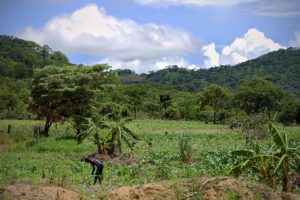
The project Enhancing rainfed agricultural systems in the Zambezi Watercourse, known as Zambezi TIARA, has been developed to build case studies aimed at influencing policy making by showcasing how enhanced rainfed agriculture can improve and safeguard smallholder farmers’ livelihoods in the Zambezi River Watercourse.
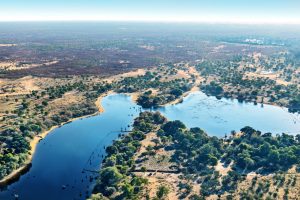
The waters of the Zambezi River Basin are critical to sustainable economic growth and poverty reduction. The region, which spans eight countries (Angola, Botswana, Malawi, Mozambique, Namibia, Tanzania, Zambia and Zimbabwe) is home to more than 30 million people, who rely on the basin waters for their basic needs.
The basin waters serve an essential role in providing regional food security, environmental goods and services, and generating hydropower. An estimated 65-70% of the population are engaged in small scale, rain-fed agriculture. Many live in extreme poverty, caused by poor agricultural productivity and climatic variability, particularly the cycle of floods and droughts that have devastating effects on the people and economies of the region.
The Zambezi Watercourse Commission (ZAMCOM) has developed a Strategic Plan of the Zambezi Watercourse (ZSP). This includes a “livelihoods support” component, which provides for investment initiatives into rainfed agriculture in the Zambezi Watercourse. The strategy aims to increase the availability of water for smallholder farmers and improve rainfed agriculture practices.
According to the Strategic Plan, enhanced rainfed agricultural production coupled with catchment management and conservation investments can improve rural livelihoods and reduce environmental degradation. The long-term aim of this work is to support rural communities along the Zambezi watercourse by increasing food security, improving climate resilience as well as water and land management. It is also to create jobs and sustainable livelihoods whilst contributing to growth and development.
SIWI will support ZAMCOM’s implementation of the Strategic plan through the TIARA initiative and its component Enhancing rainfed agricultural systems in the Zambezi Watercourse 2020 – 2025. SIWI is securing organisational support from ZAMCOM through a Memorandum of Understanding, which is nearing fruition. Through the MoU, SIWI will leverage experts and attract partners and donors to support the implementation and financing of this project in the Zambezi watercourse.