STAY INFORMED
SIWI newsletter
Receive SIWI’s latest news, events, reports and jobs directly in your inbox.
You can unsubscribe at any time, and we will never share your email address.

This article is a translated version of the original Swedish op-ed published in Dagens Industri on 4 June. It was co-authored by Helena Thybell, Executive Director, SIWI, and John Rune Nielsen, CEO Swedish Environmental Research Institute, IVL.
Sweden’s water infrastructure was built for a climate that no longer exists. The effects of climate change are already clear: fields that first dry out and then flood; more frequent intense rains – which our sewage systems were never designed to handle; and drinking water sources threatened by contamination. At the same time, raw water quality is at risk from pollutants like PFAS, pesticides, and nutrient runoff. It’s not enough to secure water volumes – we must also protect water quality.
Access to water can no longer be taken for granted. Water touches food, energy, health, biodiversity and climate – but is managed in silos. There is no overarching responsibility, no national water strategy, and current investment levels are insufficient. This must change. Sweden needs clear leadership that treats water as a future-defining issue, not just a technical one.
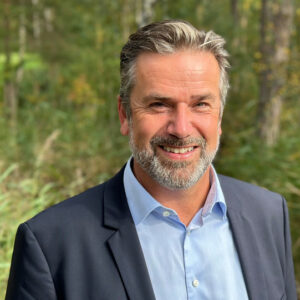
John Rune Nielsen
CEO
Swedish Environmental Research Institute IVL
1. Adopt a holistic approach to the water cycle.
We need to plan for the entire hydrological system – from rainfall and green water (soil moisture and evapotranspiration) to groundwater and landscape-level flows. This is especially important for rainfed agriculture, forests and ecosystems. Reuse of treated wastewater must be part of the solution. Sweden also needs stronger data systems and monitoring to support long-term decision-making.
2. Clarify responsibilities and coordination.
Sweden currently has five water authorities that coordinate management under the EU Water Framework Directive – an important mandate, but with limited scope and visibility. Meanwhile, responsibility for water remains fragmented across agencies, sectors and governance levels. To meet the impacts of climate change across the water cycle, we need stronger national leadership. This doesn’t require creating new agencies – but existing mandates must be aligned, and coordination must be prioritised.
3. Prioritise nature-based solutions.
Rather than building more concrete, we must protect and restore wetlands and sustainably manage forests and agricultural land to retain water in the landscape. These solutions are cheaper, more resilient, and benefit biodiversity. They also reduce infrastructure costs, improve microclimates and deliver new ecosystem services.
4. Create incentives to make every drop count.
Today, there are few incentives to retain water in the landscape, even though it’s critical for addressing both drought and flooding. While some rules exist – such as stormwater management requirements for new urban developments – broader policy tools are lacking to promote delayed runoff, rainwater harvesting or protection of aquifers. Forestry and agriculture can play a key role but need the right support systems to do so. Private property owners should also be encouraged to participate through simple measures such as rain barrels and green roofs.
Water is not just a resource – it’s a foundation for food, safety and climate resilience. Sweden needs a national strategy to manage the water challenges of today and tomorrow.– Helena Thybell, Executive Director, SIWI