STAY INFORMED
SIWI newsletter
Receive SIWI’s latest news, events, reports and jobs directly in your inbox.
You can unsubscribe at any time, and we will never share your email address.

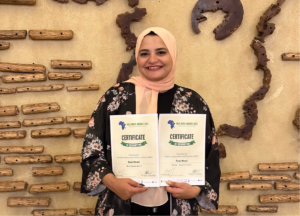
You are no stranger to being nominated and winning prestigious awards for your journalism. This particular prize is awarded to women in the Nile basin, how does winning it affect your future journalistic pursuits?
I was actually very surprised; this is my first prize for my work in Africa. I have been reporting about specific issues on the continent. This will be super helpful to get grants or other support – it gives me credibility and recognition of my work.
What does this specific story, for which you won the Nile Basin Award, mean to you?
I was born in a village in the Nile Delta in Egypt, by the water. When I saw the relationship of the people, farmers, and environment, I became very interested in the issue – this is why I became an environmental and climate journalist. When I report on the Damietta region in the Nile region, it feels like it’s my problem, my people’s problem, not other people’s problems. I feel like I am writing about our history, of people I know.
What challenges do you face as an environmental and investigative journalist in Egypt? Does it make a difference to be a woman in that field? What do you do to overcome these challenges?
It is definitely not easy to be a woman journalist, not just in Egypt, but in the whole world. It’s not easy to be a woman wearing a hijab particularly and works in journalism, and your work requires constant field work and travel. There are a lot of stereotypes. For example, I am very often asked if I am married when I travel by myself.
Before each field work, I do a very thorough risk assessment to define what I can do and cannot do. I always share my live location and am accompanied by trusted person (a man) on site. In every story I write, I have had challenges: For this particular story, I had to go on a boat with men only to travel to the other side (it was an about 30-min long journey) and it was not accepted that I would be alone. I had to rely on a man friend to accompany me for this trip.
Communications Consultant
When I report on the Damietta region in the Nile region, it feels like it’s my problem, my people’s problem, not other people’s problems. I feel like I am writing about our history, of people I know.
In every story I must respect and include women’s perspectives. In the environment and the climate issues, women are affected more than men.
My advice to young women who want to be journalists: Be organized, know where you want to go and what you need to do to reach your goal – take the road until the end.