STAY INFORMED
SIWI newsletter
Receive SIWI’s latest news, events, reports and jobs directly in your inbox.
You can unsubscribe at any time, and we will never share your email address.

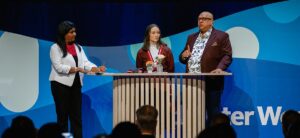
Aana is a board member in Sáminuorra, the Sámi national youth organization. The Sámi people are the Indigenous People who reside in Sápmi, which encompasses the northern parts of Sweden, Norway, Finland, and western Russia.
Phil is from Moree, North South Wales, and is a member of the Gomeroi Nation. His homelands are Moree and Terry Hie Hie. Phil has over 40 years’ experience working with Aboriginal people and the government through both his professional work and his active volunteer community work.
Aana: The concept of borders is made-up and not something that naturally exists. It stops us from working together, and it is something we need to work against. That’s why I think that the theme of this year is so important. In the end all of us are striving for the same goal: an earth we can live on with good waters and lands.
There’s also a border or gap in what’s at stake. For Indigenous Peoples, it [a healthy ecosystem] is a question about the existence of our people in the future. But for companies it might be more economic profit or growth in the short term. The fact that we don’t have the same perspectives creates a border.
This is what comes to my mind when thinking of borders and bridging them.
Phil: Three years ago, there were only five Indigenous Peoples represented at World Water Week, this year there are significantly more, the numbers are amazing. So, we have bridged that border of representation and the opportunity to amplify Indigenous Peoples’ voices globally.
My advice to other participants is to observe how we negotiate and see our vision through the eyes of future generations. And then approach discussions at World Water Week with a shared awareness, leaving your preconceived position at the door.
It’s important that we seize this opportunity of coming together at World Water Week, to look at how we bridge borders, not just territorially, but also in industry, government, and community, making Indigenous Peoples’ central to the dialogue and negotiations.
Communications Manager
radhika.gupta@siwi.org
The concept of borders is made-up and not something that naturally exists. It stops us from working together, and it is something we need to work against. That's why I think that the theme of this year is so important. In the end all of us are striving for the same goal: an earth we can live on with good waters and lands.Aana Edmondson, Board member in Sáminuorra,
Three years ago, there were only five Indigenous Peoples represented at World Water Week, this year there are significantly more, the numbers are amazing. So, we have bridged that border of representation and the opportunity to amplify Indigenous Peoples’ voices globally.Professor Leslie (Phil) Duncan, Gomeroi Nation